「释义」
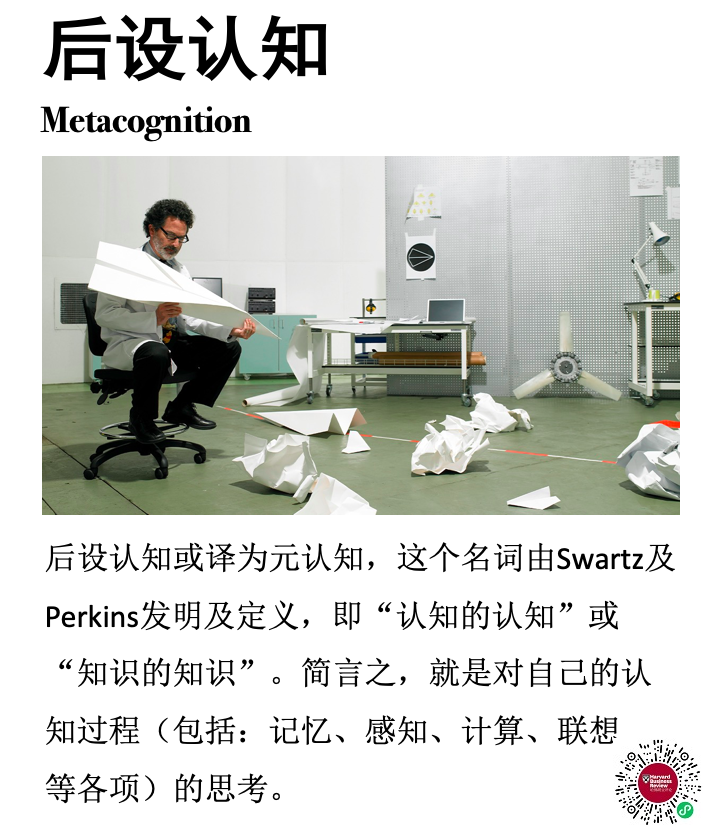
后设认知或译为元认知,这个名词由Swartz及Perkins发明及定义,即“认知的认知”或“知识的知识”。简言之,就是对自己的认知过程(包括:记忆、感知、计算、联想等各项)的思考。
后设认知可以用于学习策略,是一种个人控制及引导心智历程的现象。到自己的思想模式之同时,透过控制自己的思想模式,从而达至效果的学习方法。
后设认知这个概念对教学非常重要。唯有一个人了解到自己如何获取一件新的知识,他才有能力把这个新的知识传递给其他人。
「应用场景」
后设认知对于学习能力非常重要。心理学家把后设认知定义为“对思考的思考”,大体上来说,后设认知是要更认真检视你如何知道自己知道什么。这就是要你问自己一些问题,像是:我真的了解这个概念吗?我能够对朋友解释这个概念吗?我的目标是什么?我需要更多背景知识吗?或者我需要更多练习?
Metacognition is crucial to the talent of learning. Psychologists define metacognition as “thinking about thinking,” and broadly speaking, metacognition is about being more inspective about how you know what you know. It’s a matter of asking ourselves questions like: Do I really get this idea? Could I explain it to a friend? What are my goals? Do I need more background knowledge? Or do I need more practice?
以上文字选自 Learning Is a Learned Behavior. Here's How to Get Better at It. 乌尔里希·博泽(Ulrich Boser)| 文 马冰仑 丨编辑